

Beta Key provided by publisher
DUSK is an upcoming first person shooter from the mind of indie developer David Szymanski, published by New Blood Interactive. A first-person shooter with a strong focus on labyrinthine playgrounds, coloured key progression and warehouses stuffed full of gun fodder isn’t necessarily one that is fresh in concept, given that the past few years have slowly started progressing further through the ‘retro’ eras, finally breaking out of pixel art and entering the easy-on-the-eye glory of 90s PC technology.
What is definitely fresh is the love and care. Fear not, the title strays far from the dreaded “love letter” quality of title, even if its influences are not only on the sleeve, but tattooed to the forehead.
There is plenty to say about what I have played of Dusk, being the 11 levels available in Episode 1: “The Foothills”, the first of three planned episodes for the full campaign.
Before that though, for the sake of context, we should do a quick refresher on the design and general crafting advances that occured as the 90s ticked on*, many of which have all but outright dropped dead as the more casual-focused, realism-adherent ‘cinematic’ shooters came to climb to the top of the gaming food chain once the industry grew.
*obviously just skip this next section if you already know it*
Get Up To Speed
The fondest memories of most shooter-loving gamers (over the age of 20 at least) often sit within the first few steps of evolution the genre took. In 1993, idSoftware released a industry-shaking follow up to the now iconic Wolfenstein 3D.
Doom, arguably the game that made the First-Person Shooter a reputable genre, revolutionised game design in terms of not just level design, intricacy, atmosphere and scope, but the technology that sat behind the screen as you played, dreaming up previously unthought of labyrinthes filled to the brim with ammo, secrets and a whole lot of well-crafted thoughtfulness. 1994 flew by and the sequel, Doom II: Hell on Earth more or less put the cherry on top, diving deeper into the possibilities the engine idSoftware had created offered.
Heretic still remains an odd landmark, with the little nudges it gave the industry with audio design and a dark-fantasy tone that stood out alongside Doom’s horror themes.
Early 1996 dropped a surprise for gamers, Duke Nukem 3D by the development studio 3DRealms. The first real challenger to id’s absolute dominance of both the genre and the platform in general. Mantled on the tremendously innovative Build engine, it evaded the serious tones of shooters prior, making a more societally targetted game filled with gags, guts and girls. The Build engine would go on to be used for many games that also influenced Dusk, such as Redneck Rampage, Blood and Shadow Warrior.
Moving back to id antics, while Doom had kept popping out level packs, both developer and community-made, as well as garnering the world’s first tangible FPS multiplayer community, a new focus was declared.
Quake, the first of id’s landmark fully-3D shooters, also the most-relevant to this analysis, was a huge step for id’s technology and the transition point of FPS towards what they became for years and years after. Huge arena-like battlefields, bunnyhopping for velocity or just style and a way forward for storytelling through experience rather than a wall of text (not something it entirely dodged).
Now, with the history lesson out of the way, take every game I’ve just mentioned and squish them into a tight box, ensuring the gibs don’t spray out as you do so. What you have in your hand now is the core design philosophy driving everything in Dusk.
You should understand what I mean in short time.
Loyal, Well-Tuned and Intimate
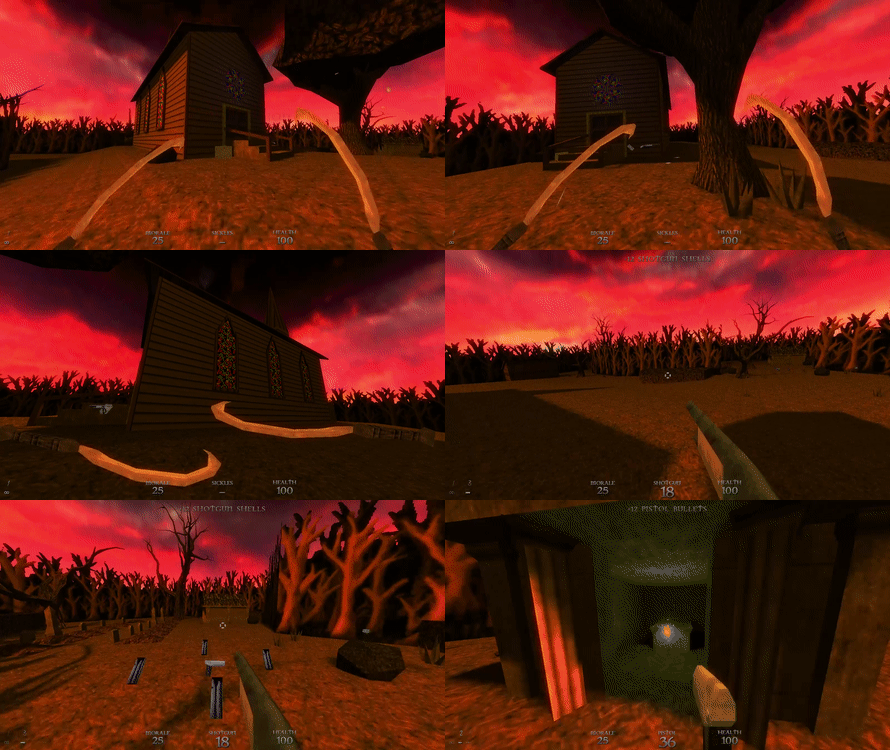
Through Episode 1’s 11 maps you go through a relatively clean array of scenes. With only a brief logo pop and a voice clip, you are set loose to madly gib away at your will in the basement of an isolated farmhouse. After traversing the farmlands, the level set goes into tight crypt-like mazes and an abandoned town or two, before ending on your way into a distinctly differing design of area, one that I would assume preludes the more militaristic, compound-like design of Episode 2, “The Facilities”.
What you’ll be doing as you fly at high speeds through the hordes of The Foothills differs pretty wildly.
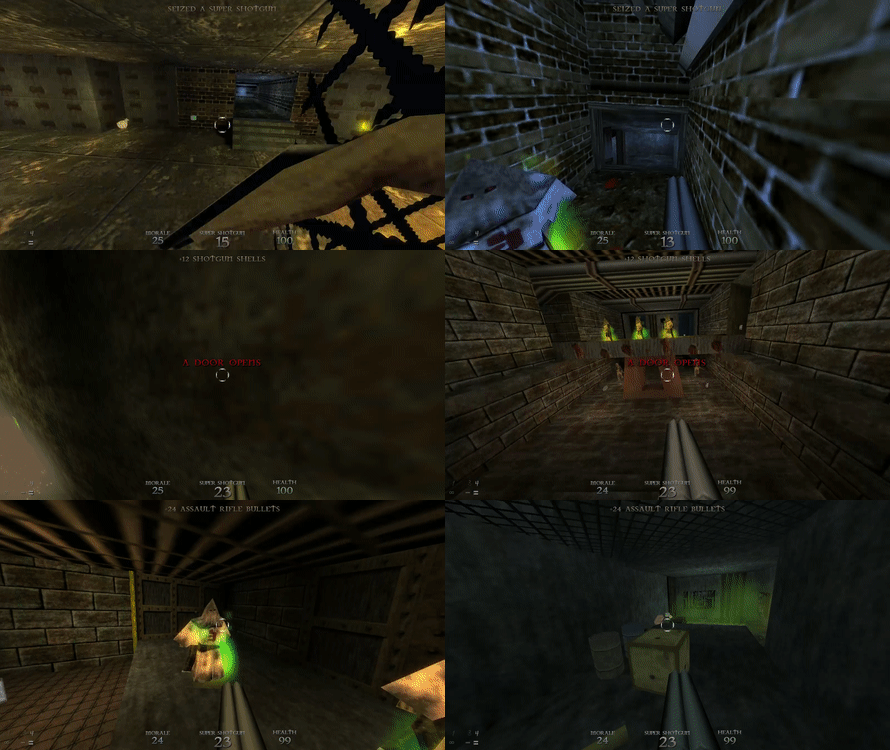
Some levels are a dense labyrinth with switches and triggers spread throughout to keep you on your toes with monster closets, side passages and the fabled coloured keys of classical fame. In the wider maps there is a fine care given to keeping you occupied as you traverse around the level, inspecting each nook and cranny for Ammo and Morale (Dusk’s Armour), plus the true rewards of the design’s natively encouraged explorative playstyle: hidden caches, shortcuts and secrets.
The secret areas, both plentiful in number and material worth, really end up composing the character of the level you are in. Some are more blatant, big ammo closets just locked away along the sides of passageways. The finer ones have you doing a lap or two, absorbing everything you can interact with in the immediate area. Cracks in walls that requires explosive canisters (provided you haven’t found an explosive weapon yet) reveal suitably lit and toned back-alleys to charge through.
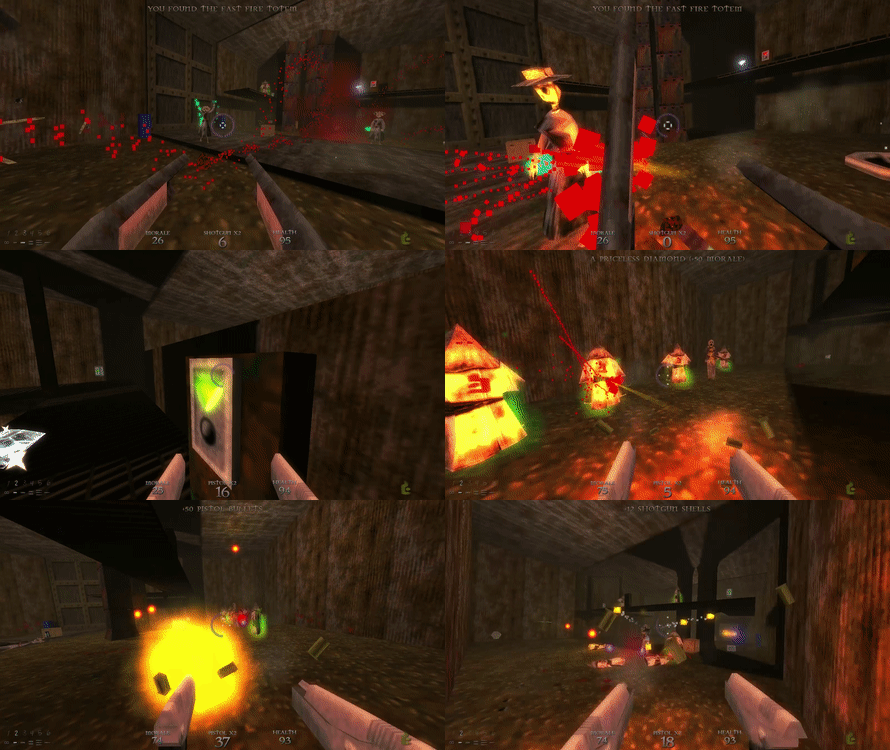
The means to carry explosive weaponry itself is a very deliberate choice. Only 2 of the 10 weapons at your disposal have such capability. The ammo for these two weapons are placed so sparsely yet deliberately that you will absolutely need to go hunting down all the secrets to use them as actual weapons of combat rather than solely for utility.
Gunplay itself is strong in terms of weight, spreads and overall choice. The Pistols and Shotguns can both be dual-wielded and the Super Shotgun cracks like thunder, as it should. The Assault Rifle felt a little underwhelming, likely closer tied to the Super Shotgun’s destructive force. Rounding up the arsenal are the Hunting Rifle, your long distance, pinpoint accuracy weapon, alongside an oddly fast and accurate crossbow.
A Blur By Design
One thing that needs to be stated strongly with Dusk is that it is a very fast game. Very, VERY fast. Shamelessly so. Basic movement covers ground fast enough before you add strafing into the mix. As is everybody’s instinct when playing these types of shooters, you are jumping constantly. Dusk’s speed mechanics allow you to build up to top speed within a few jumps, resulting in an absolute streak of a bunnyhopping gunman that mantains perfect control for aiming at mobs. In that sense, you can essentially play this game as if it were Quake 3: Arena. This definitely helps with the more obscure or just well-hidden secrets, making even the longest distances to scour fly by in a set of swift motions. Your Riveter will provide the means to fulfill the much needed rocket jump hit these games almost obligatorily require. A staple classic shooter principle, which is something that easily summarises the approach Szymanski is taking overall with Dusk.
There does come some on-the-nose aspects with such a strong throwback. Random monster closets purely to hinder come about when they aren’t expressly allocated to new routes to advance in the level, containing negligible ammo or nothing at all. While most levels really hit their own tone proper, some of them accentuated the intentionally dated aesthetic of the game to an almost detrimental degree. While the era was pretty grey, brown and dark in terms of textures, Dusk feels more visually authentic as a modern title when it throws popping ambient light at you through dark rooms or from the light of dusk above. I would hope that Episode 2 and 3 brings some more of that to the table, after establishing the dull farmland for what it is.
You’ve read of so much contained within such a simple frame, but really Dusk has no biological daddy as it were. I’ll maintain that the game in action holds the closest resemblance to the original Quake, but there is a very deliberate range of design bits hand-picked out of the bulky and fast-moving 90s FPS scene. So for fans of Quake, Hexen, Blood, Heretic, Duke 3D and Redneck Rampage, keep your eye on this. It is designed to cater to your sensibilities in a way that surpasses most throwback titles. I’d recommend a close eye for the Wolfenstein and Doom fans as well, though the game definitely sits on the later end of the 90s in terms of philosophy, so if anything take a peek through footage as it comes out approaching the release.
 Glitching Is Art
Leave a comment